|
 |


The Nisqually Reach
Nature Center is a great place to get acquainted with the
natural history of South Puget Sound's estuaries, and as a home
base for serious studies. Studying or even observing mudflat
organisms and near-shore fish is not easy unless the tides are
right, so we're building an aquarium system to show you what's
out there. Right now, we have four circulating seawater aquaria,
and a fifth in development.
-
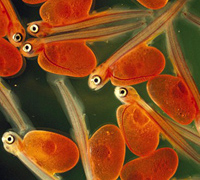
Our fish and
sea-bottom aquarium has an ever-changing variety of small
bottom fish, sea stars, and shellfish
-
Our mudflat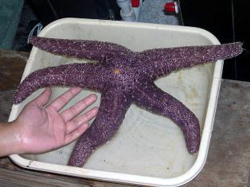 aquarium simulates the rise and fall of the tides and has a
variety of snails and other burrowing organisms, as well as
some surface-dwelling shellfish.
aquarium simulates the rise and fall of the tides and has a
variety of snails and other burrowing organisms, as well as
some surface-dwelling shellfish.
-
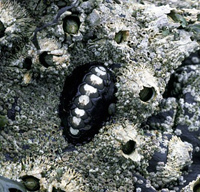
Our piling
habitat aquarium also simulates the rise and fall of the
tides. Here, we're conducting an ongoing experiment to learn
how pilings are colonized.
And soon to be
online will be a subtidal macro algae habiat, which we'll also
seed with native Olympia Oysters (Ostrea lurida).
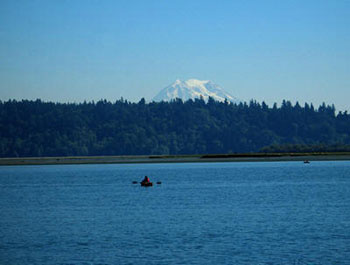
Observing birds at
the nature center is a special treat. Luhr Beach is the best
place to observe birds on Nisqually Reach and Nisqually Flats.
Set up your spotting scope on the pier under the roof, or in
really inclement weather, seek shelter in our observation lounge
wih a 180-degree view. Click on the link above to see a list of
birds we have seen from Luhr Beach. Beach is the best
place to observe birds on Nisqually Reach and Nisqually Flats.
Set up your spotting scope on the pier under the roof, or in
really inclement weather, seek shelter in our observation lounge
wih a 180-degree view. Click on the link above to see a list of
birds we have seen from Luhr Beach. |